
Insights · Operating Model
One queue: the life of an obligation, from inbound to evidence.
A fund's work does not arrive as a task list. It arrives as inbounds, scattered across email, chat, the CRM, the board and the calendar, and the job of deciding gets buried under the job of finding what needs deciding. This is the operating model that puts every obligation through one lifecycle, and what changes when it does.
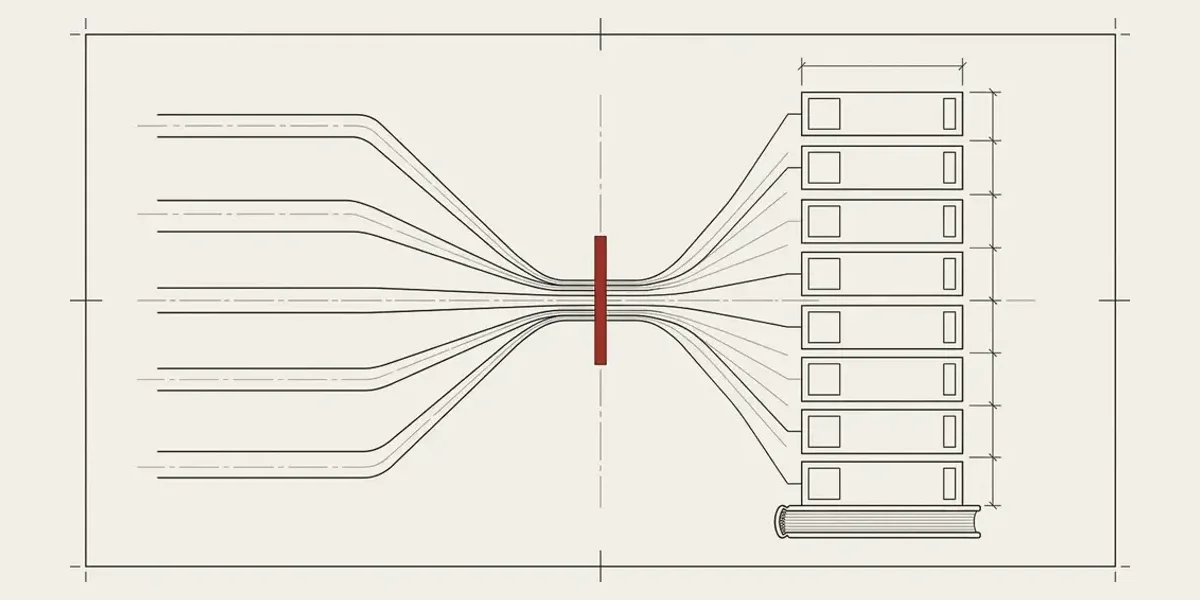
queue for every surface work arrives on
days a month returned by the recurring calendar, indicatively sized
recurring tasks sized end to end against the manual version
item, decision and control on one append-only record
The premise
The work arrives anyway.
Nobody at a fund plans their day. The day arrives, on five surfaces at once, and a Principal’s decisions land on all of them.
An allocator’s DDQ in the inbox. A compliance attestation overdue in a thread. An administrator query. A meeting in ninety minutes with an LP whose file nobody has reread. A factsheet deadline. A commitment made in last week’s meeting that exists only in a notebook.
The firm’s real operating system is the set of surfaces work arrives on, and the task board is downstream of all of them. The expensive failure is rarely that a single item is hard. It is that finding, sorting and holding the items consumes the attention the items themselves deserve. A task list only helps once something has become a task, and at most firms that conversion is manual, partial and permanently in arrears.
Converge
One queue instead of five inboxes.
Every surface is swept continuously by Tōryō, Genba’s Chief of Staff system, and anything that genuinely needs the Principal arrives in one channel as a numbered decision card: one screen, the context already gathered, the recommendation already formed.
A thumbs-up approves. A disposition grammar handles the rest: approve, edit, reject, or hold until Friday. The Principal stops checking five places, because everything that needs them shows up in one list, already researched, and closes with a tap.
Two details keep the queue from becoming another notification stream. The first is Tōryō’s interrupt budget: a closed, static list of what may interrupt a human, and a daily limit on how much attention the system may spend, so urgency is never a per-item judgement call made in the moment. The second is silence. When a sweep finds nothing genuinely actionable, the turn produces no output at all. A system that reports “nothing to report” trains its reader to stop reading, and the quiet is exactly what makes the queue worth opening.
Own
An item, an owner, a date.
Everything that survives triage becomes the same object: a tracked item with an owner and a date.
The conversion is aggressive about its inputs. Review comments on a document become items. Administrator queries become items. Attestations become items. Commitments made out loud in an LP meeting become items. Handwritten pages from a notebook are read, transcribed, and the commitments in them land on the board with owners and dates attached.
This is the hinge of the whole system. Every downstream guarantee, the chasing and the evidence and the clean month-end, depends on work existing as items rather than as scattered intentions.
What is written down can be chased. What is chased does not decay.
Chase
The ladder nobody has to climb.
Chasing is the most demoralising work in any firm, and the person who owns an item is the worst person to chase it. So no person does.
Anything that must be actioned escalates on Tōryō’s ladder: a re-ping in thread, then the alert surface, then a final call, then a hard stop at end of day. Anything still unacknowledged rolls into the next morning’s briefing, marked missed and still open. Delegated work is chased on the same mechanism, and attestation cycles, the classic quarterly chase, run the ladder without a human ever being the nag.
The effect is asymmetric. For the person being chased, ignoring something means it comes back louder tomorrow. For the person who used to do the chasing, an entire category of low-grade interpersonal friction leaves the building. Nothing regulatory slips, because ignoring it is not one of the available outcomes. Silence about the clean days and relentlessness about the ignored ones are halves of the same attention contract, and between them they decide whether a system is still switched on in month six.
Draft
The document production line.
Most of what a fund owes the world is documents, and most document work is the same four moves.
Find
What the firm said last time: the last comparable DDQ, the prior letter, the previous committee pack. Most of a manual first day goes on locating what already exists.
Re-derive
Every number rebuilt from the current period rather than the one it was written in. A stale figure in an investor document is worse than a missing one.
Chase the gaps
The sections nobody in the investment team can answer, the attestation that has not come back, the administrator’s outstanding query. All of it runs on the ladder, and no human is the nag.
Harmonise
One voice, no contradiction with anything already said in writing, and every output saying the same thing: factsheet, database submission, letter.
A DDQ is matched against the approved answer bank and prior submissions, drafted in house voice, and checked for contradiction. Anything the firm has not answered before is flagged as a gap and left open, and an unavailable figure is raised as an open item with an owner instead of invented. The quarterly letter assembles from the real numbers and from every prior letter, with the firm’s own framing carried forward. The month-end pack begins drafting with the first input to arrive, instead of waiting for the last, and one set of numbers feeds every output, so the factsheet and the database submission cannot drift apart.
The committee variants, counterparty reviews and asset screens, arrive built, with changes since the last review called out, so the meeting argues about the conclusion instead of the data. The investor-relations desk is where this production line is most visible, because that is where the whole written record has to hold together in front of the most demanding readers a fund has.
Hold
Drafts everything, sends nothing.
All of it happens behind one hard boundary, held by Daimon: no agent sends an external email or outbound message to a third party.
The system writes the reply, stages the document, checks the distribution list and tracks the approval, then holds the finished artifact at distribution for a named human, who presses send. Always.
This is the rule that makes agentic work deployable at a regulated firm. The fear that keeps such systems away from investor-facing work is a correct reading of the stakes, so the answer to it has to be structural rather than cultural. The system does every part of the job up to the send button, and it is incapable of pressing it.
Record
Reconstruction is a query.
Every item raised, every decision and its disposition, every control that passed or blocked, lands in Shuin, Genba’s append-only record.
“Why did that not get done?” and “who approved this?” are expensive questions to answer retrospectively, and for a regulated firm they are not optional ones. Here they are a query rather than an archaeology project, answerable months later with the context intact, for a regulator, an auditor, or an allocator’s operational due diligence team. Every action that touched a live system carries its own receipt from Daimon, the governed execution boundary, and the whole lifecycle runs inside one operating context held by Tōryō.
The record also closes the loop on the boundary. The firm does not merely assert that nothing goes out unapproved. It can show the approvals.
The payoff
What the lifecycle gives back.
Run every obligation through the lifecycle and the recurring calendar changes size.
The table below sizes ten tasks a fund runs end to end against the manual version. The hours are indicative, sized from the shape of the work rather than from a stopwatch. Where a claim has to be evidenced, Shuin produces a measured count over a stated window.
| Task | Cycle | Manual | With the system |
|---|---|---|---|
| Allocator DDQ or RFP | Per request | 2.5 days | 2 hrs |
| Quarterly investor letter | Quarterly | 4 days | 4 hrs |
| Month-end factsheet and reporting pack | Monthly | 1.5 days | 2 hrs |
| New asset screen | Per candidate | 1 day | 30 min |
| Counterparty and venue review pack | Per review | 1 day | 1 hr |
| Compliance monitoring and attestation cycle | Quarterly | 1.5 days | 3 hrs |
| Position, cash and NAV reconciliation | Daily | 45 min a day | Exceptions only |
| LP and prospect meeting preparation | Per meeting | 2.5 hrs | 15 min |
| Investor onboarding pack | Per subscription | 0.5 day | 45 min |
| Investment thesis invalidation watch | Continuous | Not done | Review only |
Recurring tasks alone, before any per-event work, return six or more days a month. The strongest single line is the first: a full institutional DDQ, two and a half days across two or three people, becomes two hours spent reviewing a draft and its flagged gaps.
The last row
The task nobody has time for.
The final row carries no manual number because nobody does the work.
A position’s thesis is written once, in a memo, and the memo is never opened again, so positions end up held for reasons that quietly stopped being true. That cost does not show up in hours.
Treat thesis invalidation as a monitored condition and it joins the same lifecycle as everything else. Every memo states what would make it wrong; those conditions become monitored items, silent while they hold and raised when they trip, with the original memo language quoted next to what actually changed, on an escalation path that makes not-looking unavailable.
That is the honest summary of the system. It runs the firm’s existing obligations faster, and it also runs the ones the firm never had the capacity to staff, keeping the evidence that they ran.
Q&A
Questions, answered
Direct answers to the questions this architecture raises.
01How can a fund manage inbound work spread across email, chat, the CRM and the calendar?
Sweep every surface continuously and converge what genuinely needs a decision into a single queue, as numbered decision cards carrying the gathered context and a formed recommendation. This is how Tōryō, Genba's Chief of Staff system, runs a Principal's day: one list instead of five inboxes, and a disposition grammar that closes each card as approve, edit, reject, or hold. Everything else becomes a tracked item with an owner and a date, and waits its turn. Task management is a solved problem at most firms; inbound management is the one that is still manual.
02Can an AI system send an email to an investor or counterparty?
Not in this design. No agent has a send path to a third party, and Daimon, the boundary every action crosses, holds no registered contract for an outbound third-party send, so external contact is a structural impossibility rather than a configuration choice. The system writes the reply, stages the document, checks the distribution list and tracks the approval, then holds the finished artifact at distribution for a named human, who presses send.
03What decides whether something is allowed to interrupt a Principal?
A closed, static list agreed once and in writing, plus a budgeted daily limit on interruptions. Urgency is never a per-item judgement made in the moment by the system. Everything outside the list queues and arrives in the next morning's briefing, which is why the quiet can be trusted.
04What happens to a task the owner ignores?
It escalates on a ladder: a re-ping in thread, then the alert surface, then a final call, then a hard stop at end of day. Anything still unacknowledged rolls into the next morning's briefing, marked missed and still open, every day until it is actioned or explicitly closed. Ignoring an item is not one of the available outcomes, which is what keeps regulatory obligations from slipping quietly.
05Are the hours in the ten-task table measured results?
No. They are indicative estimates of what the manual version costs and what survives once the lifecycle runs, and they are published as estimates deliberately. Where a claim has to be evidenced, the append-only record produces a measured count over a stated window for the firm's own tasks.
06What does a fund do with the capacity this returns?
The recurring calendar is the visible half. The more valuable half is the work no firm has ever had capacity to staff, such as watching every investment memo against the conditions that would invalidate it. That work runs on the same machinery as everything else: items, owners, monitors, escalation, record. There is no second process to design.
07How soon after deployment does any of this show up?
The queue is immediate, because convergence and triage need nothing from the firm beyond access to the surfaces work arrives on. The first full month-end is where the calendar visibly changes size, since that is the first time an entire recurring cycle runs through the lifecycle end to end.
Pick the surface that buries you the most.
Scope the thirty-day proof